
Ever since the beginning of the Cambrian, 538.8 million years ago, life has evolved at an incredible pace. Primitive Ediacaran (geological period, 635 to 538.8 mya) biota evolved into complex life, forever changing the oceans of our Planet. The land had remained silent, empty and, besides bacteria, almost dead. And then, the Ordovician (485.4 to 443.8 mya) revolutionized the land. Terrestrial plants, though small and fragile, started their quest for the sublimation of chemistry in favor of life. It was precisely this reconfiguration of chemical elements in the soil, that led to the very first mass extinction, 443 million years ago. Temperatures dropped, oceans acidified, death lingered everywhere. Yet, complex life pushed through, reconquered the ocean, and took further leaps towards radiating into countless species of both flora and fauna on land. Atmospheric CO2 dropped and, sadly, so did O2 levels in the oceans. Volcanism, land plants and plate tectonics poisoned the oceans. The water near the richly inhabited coasts became anoxic. Few ocean plants and animals survived, while some very few managed to adapt to the deep dark waters of the seas. A small group of fish took the opposite way, and ventured on land. And, thus the Devonian (419.2 – 358.9 mya) came to an end. The Carboniferous (358.9 to 299 mya) turned all land into a lush forest. Life diversified everywhere and, come Permian (299 to 251.9 mya), gave rise to the very first mammal-like creatures in Earth’s history: the synapsids. But then came the massive volcanic eruptions, poisoning the air. Sulphur dioxide burned all forests and CO2 spread like a gangrene in both air and water. Global temperatures spiked to 42° C, only 5° C short from a runaway greenhouse effect. The Great Dying (251.9 mya) covered Earth in a burning shadow. 95% of all life vanished and eons of evolution were almost brought to a complete halt. For the next 50 million years, life struggled to recover, becoming ever more resilient. But the planet was constantly changing and challenging every attempt of its inhabitants to survive. The giant supercontinent Pangaea stretched and cracked. Volcanoes erupted yet again. Temperatures between the tropics became unbearable. The Triassic-Jurassic Extinction (201.4 mya) took over. And in the wake of disaster, a group of animals saw an opportunity to evolve and grow stronger, more sophisticated and adaptable, ready to rule the world. Dinosaurs.
Under the might of the sauropods, the mammals that had appeared during Late Permian, could do not much than hide underground, fearing and struggling in a world of giants that would rule the sky, land and sometimes seas for almost 150 million years.
What seemed to be a neverending age of dinosaurs, abruptly came to an end 66 million years ago, when an asteroid, 15 km wide, hit Earth. The crust and part of the mantle was vaporized by the kinetic force of the impactor, and blown into the atmosphere and lower orbit. Rock came back to Earth and burned everything. The entire food chain got devastated. The initial temperature spike from the asteroid impact, turned into a cold and very long global nuclear winter. The Age of Dinosaurs was over, and from the shadows of the Earth, mammals rose to rule the world. And so they did to this very point of you and I, and our ongoing journey on this planet.
And while species and groups of animals have come and gone, one has managed to survive every single mass extinction. True, we need not forget the hardy tardigrades, bivalves and nautiloids, but nothing as complex as this animal has managed to overcome all five great calamities in our Planet’s history: the shark.
*
Sharks of the Paleozoic
It is still debatable for when exactly sharks first appeared. We already know that there is no clear pattern for any animal or plant evolution in nature. Chondrichthyes (cartilaginous jawed fish) appeared during Late Ordovician, approximately 450 million years ago. These cartilaginous jawed fish include, amongst, others, sharks and chimaeras. The first evidence of shark-like animals have been found in scales of a toothless fish, a sort of hybrid between a chimaera and a shark, as they hadn’t diverged yet into separate subclasses. By the end of the Silurian (443.8 – 419.2 mya), they had already split into distinctive superorders of fish. While it is true, that we have already found shark-like fossils (attributed to the spiny shark) from the Early Silurian, these fish were still a primitive mixture between chimaeras and sharks; scientifically speaking both and neither.
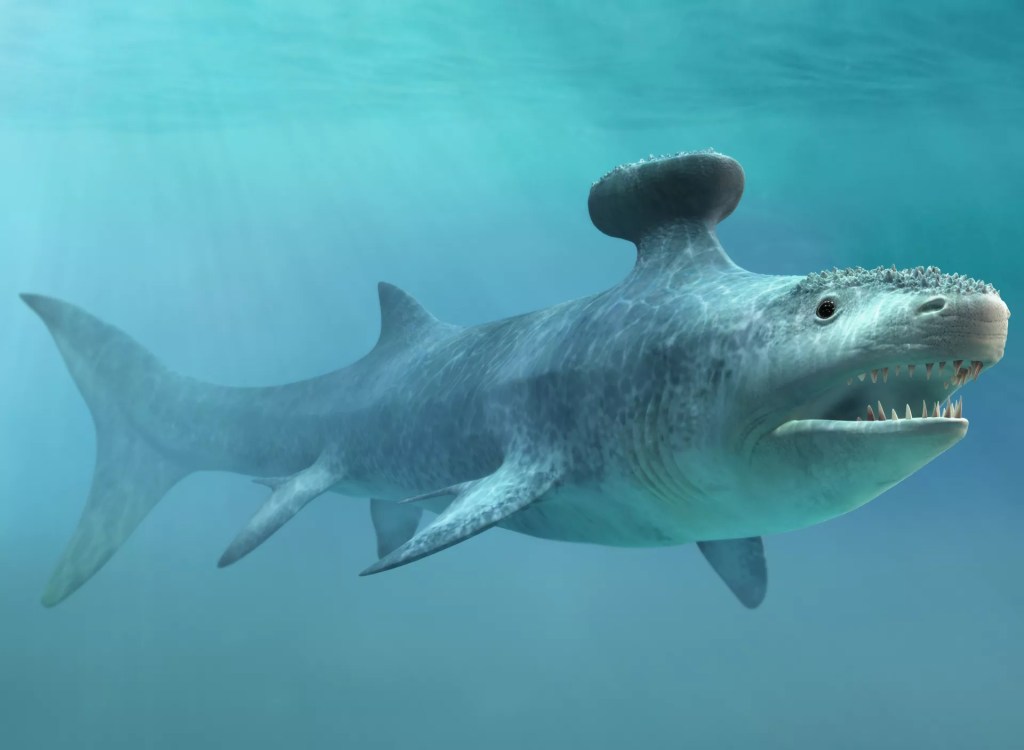
The Devonian (419.2– 358.9 mya) witnessed further development of sharks. The Elasmobranchii subclass of modern rays, sharks, skates and sawfish had now become distinctive among the jawed fish and had acquired most of the characteristics we see today: five to seven gills, a rigid fin and placoid scales. It is also during this geological timeframe that true-sharks face their first dramatic encounter with global disaster. As the Devonian Extinction began to unfold, coastal waters became anoxic, food-chains all over the planet were catastrophically destabilized or completely annihilated. By this time, sharks resembled eels more than what we know them to look like. They were still far from being apex predators of the seas. Their prime enemy: the giant placoderms. The Dunkleosteus, king of the ocean throughout the Devonian, kept sharks in the shadowed angles of marine food chain, probably pushing them away from the shallow waters where life was thriving, towards the far outskirts, near the deep waters of the ocean that had remained devoid of complex ecosystems, as marine vertebrates hadn’t quite adapted to the high pressures, lack of light and scarce nutrients. But when shallow waters became anoxic, the dunkleosteus, together with more than 75% of all marine life, went extinct. Sharks survived. They had ventured towards the deep ocean and into the Carboniferous.
When the mass extinction had finally come to an end, so did sharks become a disaster taxon, repopulating the coastal regions that had almost been emptied of life, radiating into several new orders. The Devonian (419.2– 358.9 mya) had taught sharks the ability to survive in deep waters, the Carboniferous (358.9 – 298.9 mya) was now teaching them their second, and equally important, key to their historical survival skills: the more diverse, the more likely to endure and overcome disasters, as sometimes strength resides in numbers.
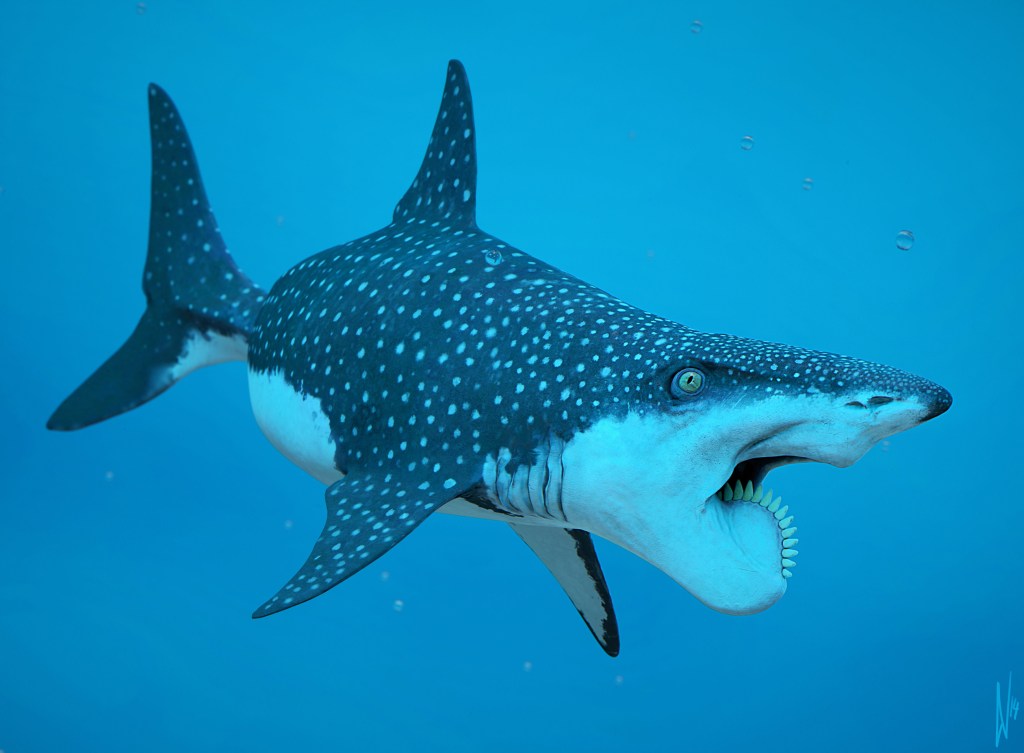
There is no other event in our world’s history even remotely similar to The Permian-Triassic Extinction Event (The Great Dying) when almost all life on our planet disappeared. Both land and sea became barren. The planet itself had turned against life. Up to 96% of all marine species disappeared, and up to 95% species globally. Shark populations, along with the rest of marine life, withered and most orders went extinct. The few that managed to survive, did so due to their previously acquired abilities to radiate into several orders and adapt to any depth and temperature in the oceanic ecosystem. Their recovery was as hard and disincentive as for all the rest of animals during the Triassic (251.9 – 201.4 mya). But as the Jurassic (201.4 – 145) unfolded, so did sharks recover, regaining their numbers and rising towards the top of the food chain. Most modern lineages of sharks come from the Jurassic, during which, these animals acquired all the features that have been preserved to present day. Jawbones and muscles became more flexible, sophisticated and articulate, and they acquired the ability to protrude their jaw and attack larger animals, defending themselves from the ever larger marine reptiles of the Jurassic and Cretaceous.
The aftermath of the Chicxulub Impactor, by the end of the Cretaceous, 66 million years ago, meant the disappearance of all large animals on Earth, including giant sharks. They had once more survived disaster, but only smaller sized orders had crossed into the next geological era, the Cenozoic (66 mya to present day).
As life recovered and the Paleogene (66.0 – 23.03 mya) was nearing its end, so did animals increase in size. True to their adaptive nature, sharks kept their path for greatness.
*
Megalodon
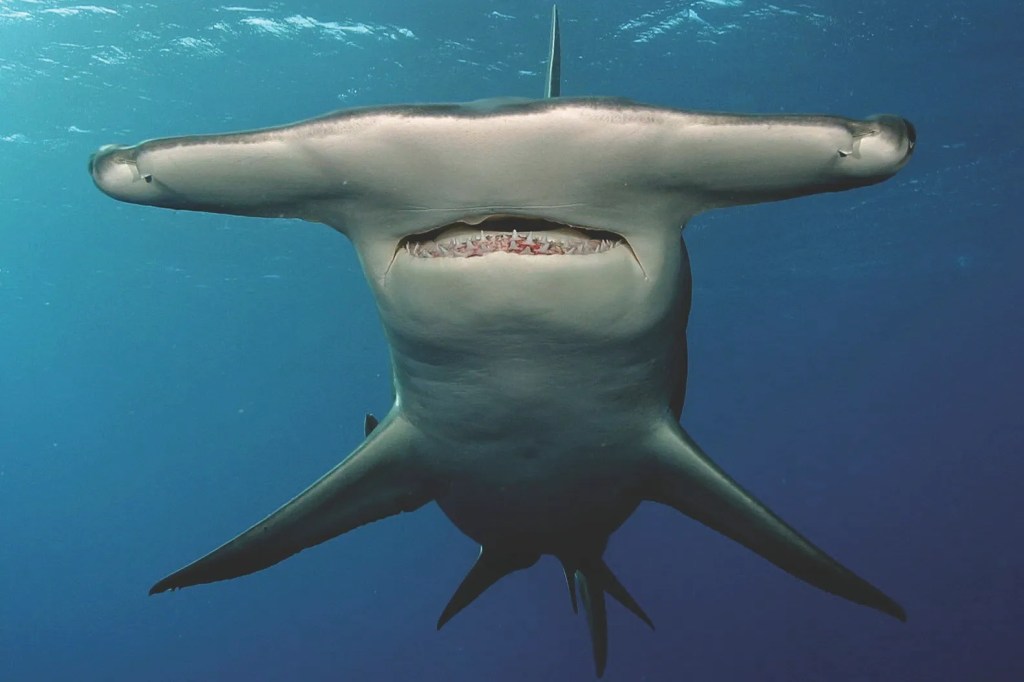
All shark groups inhabiting our seas today date back to the Jurassic, Cretaceous and Paleogene. The youngest to appear on Earth are: the hammerheads, still roaming the oceans, and the giant megalodon.
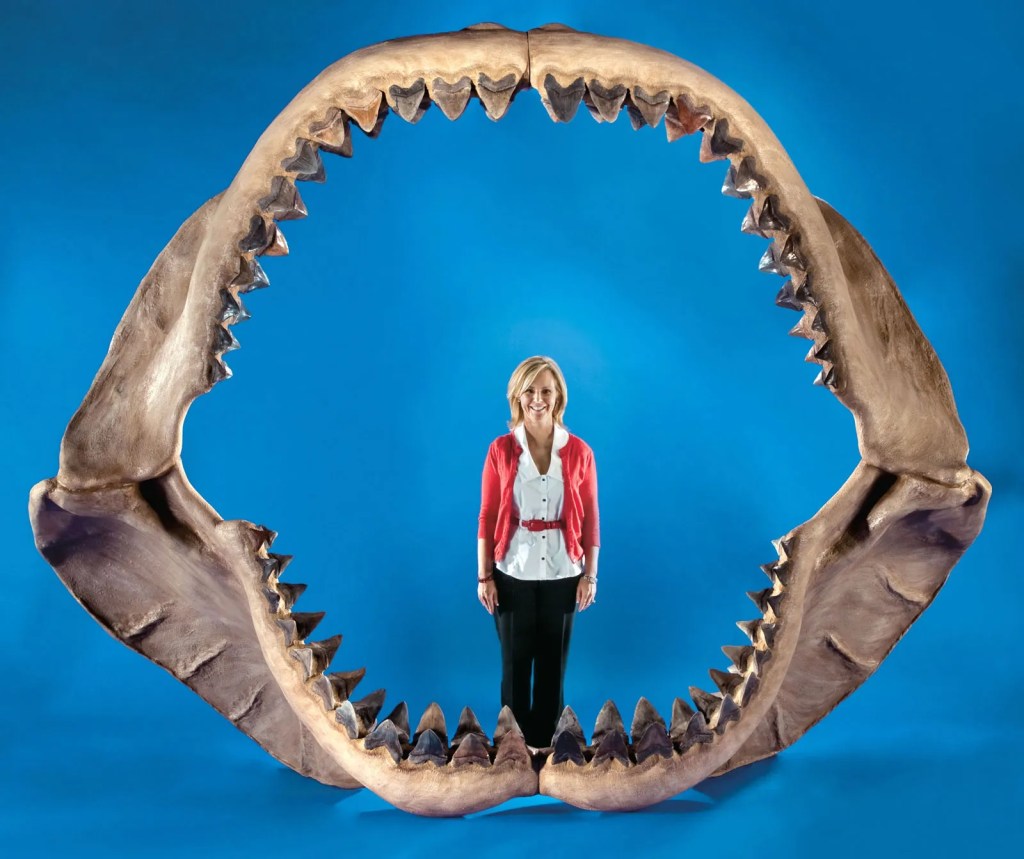
It is still uncertain how the otodus megalodon grew to become so big. Reaching up to 20 m in length and around 50 metric tons, over their entire reign in our planet’s oceans (23 to 3.6 mya) megalodon sharks could only be outgrown by the now extinct livyatan whale (9.9 to 5 mya). Modern whales hadn’t evolved yet to their current sizes, as their evolution was most probably postponed by the megalodon’s existence. Just like several modern shark groups, megalodon spawns developed inside the womb. Some recent studies suggest that, as a group, they divided from other shark families because their offspring would feed on each other inside the womb. Other studies are based on current observations and link their growth to a supposed origin of the megalodon group near the coasts of the arctic circle. For most of the Neogene (23.03 to 2.58 mya) climate was stable and seasonal. Large prey was abundant. Still, there is no clear explanation to the proportions these sharks could reach, and to why they suddenly came to diverge in size from all other shark groups.
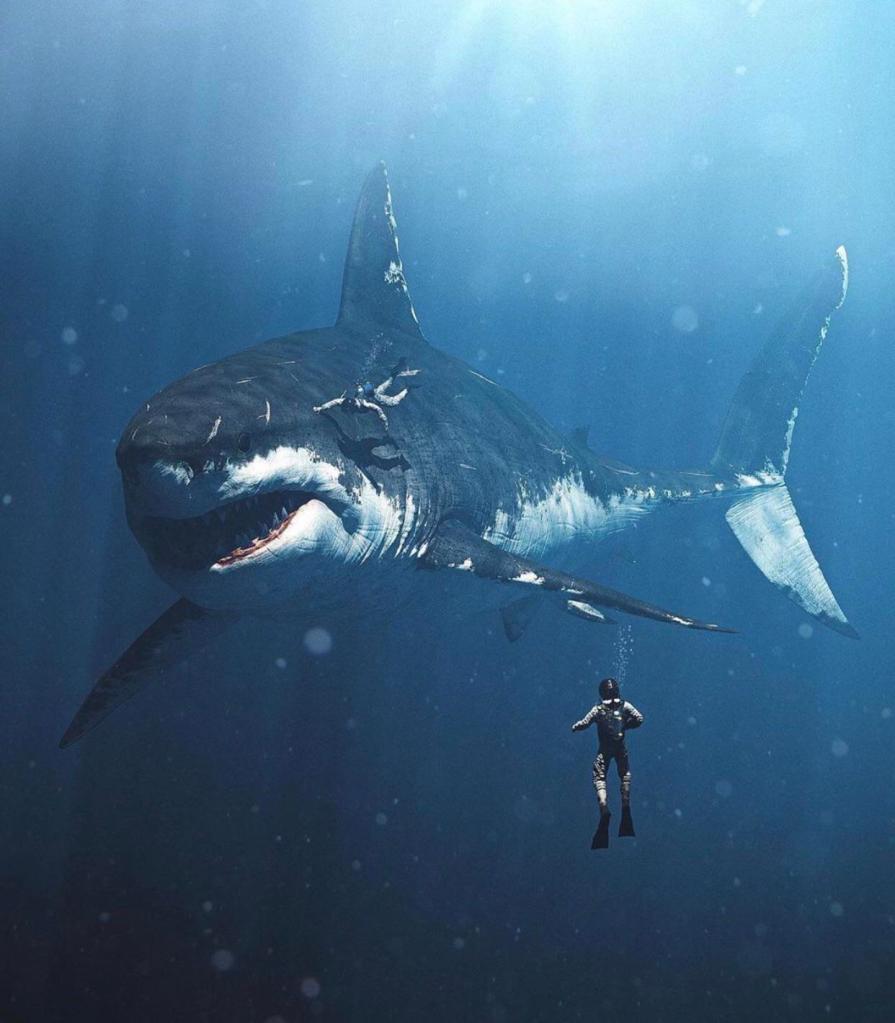
Like any other shark, not much can be traced back to their actual anatomy, except for their teeth. Their skeleton was built of easily dissolving cartilage, but their teeth would reach a fluoride content comparable to hard fluorapatite crystals. Just like most sharks, megalodons grew teeth during their entire lives, with the front row constantly being recycled. They were generalist feeders, consuming any food that was available to them.
Over the past decades, these massive fish have gained large media interest, contributing to the glorification of sharks as violent monsters and terrifying killers of the seas still lurking in deep waters. They have become fabric for public revenge.
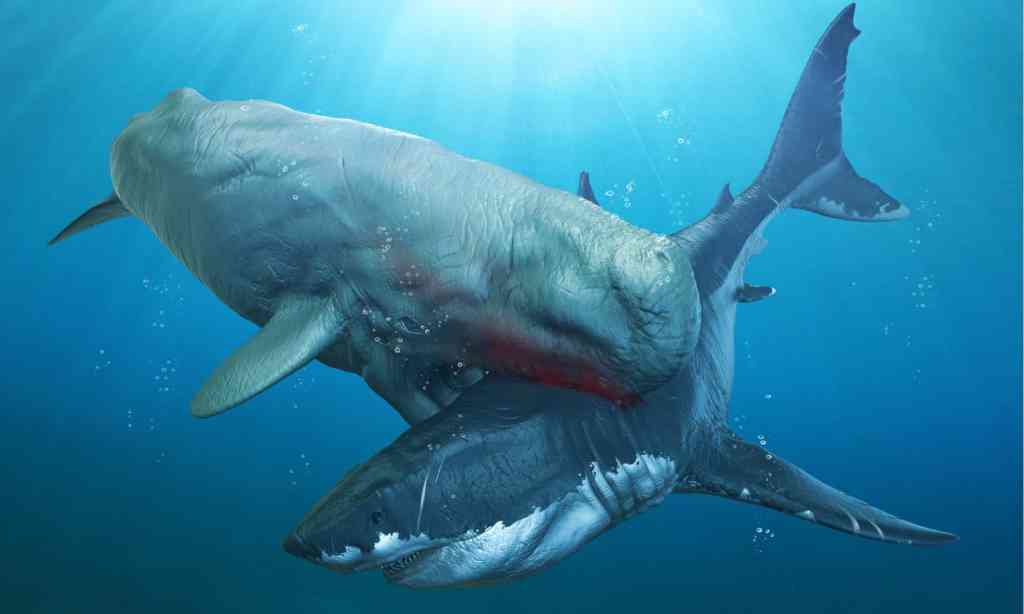
In reality, megalodons had specific life cycles, that can be traced according to the size-based geographic locations of their fossilized teeth. Young, small specimens lived in swamps, lagoons and near the shores. As they advanced in age and size, they migrated towards the open ocean and deeper waters. This cycle was obviously linked to the size of prey they could hunt, therefore excluding two theories:
First, it is unlikely they had appeared in the colder regions of the planet. Most fossilized teeth are abundantly found in the northern hemisphere, between the equator and far below the arctic circle.
Second, they are definitely extinct, as these animals would need to feed on large quantities of marine animals, mostly found in coastal areas. The high pressure of deep oceans comes with an ever more pronounced scarcity of food; the same reason they went extinct in the first place.
When the Neogene ended, the new geological timeframe, the Quaternary (2.58 mya to present day), challenged life with a much colder climate of glaciation cycles. Polar icecaps increased and as the planetary oceanic levels dropped, shallow seas retreated. Coastal regions became colder and less abundant in marine diversity. Prey became scarce and megalodons withered in numbers, until they became extinct. Their niche was quickly occupied by the already existing and much more efficient great whites. Toothed whales started diversifying, while among baleen whales, the blue whale (1.5 mya to present day) grew to become the largest animal that has ever lived on Earth.
On land, hominoids evolved into hominids, hominids into humans.
*
Humans, Sharks and The Future
Violent monsters and terrifying killers of the seas…
Sharks have survived every single mass extinction in our planet’s history and have acquired exceptional abilities to overcome every single calamity. Ever since their appearance in Earth’s oceans, they had a critical role in cycling nutrients between ecosystems, eliminating weak and diseased animals to upcycle the diversity and resilience of marine fauna and flora alike. They have become vital for complex life. They never overhunt, are highly intelligent and, except for a small number of lineages, are also very sociable and emotional. There is even evidence of sharks being able to form relationships and get attached to humans.
On average, sharks kill 5 people a year. All accidental. Although they are highly sensorial, they have very poor eye vision and, due to the environment they live in, can only see in shades of green and blue. The victims are usually surfers, who, standing on their surfboards resemble seals from below the water, or people who become very agitated on their encounter with the animal. An agitated behavior is associated by sharks with marine animals in distress, due to disease, or with offensive charges to attack them. Sharks have never killed, nor do they kill people for prey. We are of absolutely no interest to them, not to mention that it is us who invade their natural environment, not the other way around.
Sharks kill 5 humans a year.
Domestic house cats kill 20 to 30 humans a year.
Domestic house dogs kill 30.000 humans a year.
Humans kill 100 to 273 million sharks a year.
It is estimated that at least 274.000 sharks are killed on average each day. In just two days, there are more sharks killed globally than the entire shark population of the Black Sea.
The articles I write are based on extensive and time consuming research, in order to understand complex processes or events that have happened on both our planet and in the Universe. It took me an entire year to write the first line on the Devonian Extinction, as the evidence is obscure, still hidden in the ground beneath us, unclear and sometimes contradictory. The article has been published for some months now. It is definitely an interpretation of events, based on the evidence offered by geology and fossils. Yet, no matter how sparse and scarce the information I came across, I could still find a logical thread to the Devonian Extinction that took place more than 358 million years ago. I would never be able to find any logic to why sharks are deliberately killed the way they are, with almost no laws anywhere in the world to protect them, with constant vilification in the public eye and an ever growing appetite for public revenge.
Yes! Public revenge!
South Africa, Queensland and New South Wales have government-funded programs of drum lines to keep shark population “under control”. More than 95% of sharks caught in these aquatic traps are killed. The governments of the Australian territories enforce laws that prohibit entangled prey from being released. Since prey is usually referred to large fish, and drumlines are specifically built for sharks, these animals are left to die from starvation and suffocation.
New Zealand and Hawaii have funded nearly half-a-century-long programs for systematically killing sharks, with no justification except public revenge. Fortunately, both entities have interrupted these programs over the past years.
Officially, the reason of shark culling has always been public safety, and each human fatality, although accidental, has been followed by an increased appetite for vengeance supported by the public and implemented and funded by the government.
Shark fins have become a worldwide delicacy. Almost every developed country on the planet legally or illegally imports shark fins due to large public demand. Indonesia, India, Spain, Argentina, Taiwan, USA and Mexico (enumerated by the number of sharks killed evey year) account for 400.000 sharks killed a year. At least a quarter of these sharks are caught, have their fins removed and are discarded in the ocean while still alive. Unable to move and regulate their gills, most die of suffocation in agonizing pain. Others sink to the ocean floor where they die of starvation or, no longer being able to defend themselves, are attacked and killed by other marine animals. The USA and the European Union strictly and severely ban shark finning, yet these countries represent the most avid markets for shark fins. It is beyond comprehension how much cruelty and torture is inflicted on sharks on an enormous scale, just for a mere pleasure.
Several shark families are filter- or generalist feeders, completely harmless to humans and marine vertebrates. These gentle giants of the seas include: the whale shark, the basking shark or the Greenland shark. Their meat is toxic to humans, due to the environment these animals live in, but if treated and carefully processed, becomes edible and is considered a delicacy. These groups of sharks are overfished and killed just the same as any other shark group.
Whale sharks are the largest non-mammalian animals on the planet, reaching up to 19 m in length. They are filter-feeders, completely harmless to both humans and marine vertebrates. They are exterminated by humans just the same as any other group of sharks. Video credit: Lachlan Ross
Commercial fishing and bycatch, finning, culling and pollution have become the 6th mass extinction for sharks. A quarter of the planet’s shark groups are already close to complete extermination. Due to global warming and pollution, sharks have been observed to have slowed down their reproductive cycle. They might have acquired this trait during the Permian-Triassic Extinction, and it has helped them survive each of our planet’s adversities. But now, they are no longer able to regulate their population and defend themselves, as they are systematically killed by humans and their hazardous Holocene extinction.
There is at least a blockbuster a year, where sharks are portrayed as demonic spirits (actual blockbuster movie), monsters raining from the sky (literally an entire movie franchise) or cargo-ship-sized giants living in the Marianna Trench set on destroying the world (movie franchise). And let us not forget Jaws, probably the point of origin for this trend: a movie franchise that has done more damage to a species, than any other movie, to any other species on the planet.
There is almost zero interest in slowing down this extinctions, but when or if sharks disappear from our world, the entire oceanic ecosystem will collapse, as there will be no other animal left to regulate the population, to cycle nutrients between the deep and shallow waters, and to ensure other species’ diversity. A marvel of life will be wiped out by another cruel marvel of life wiping itself out… deliberately and hysterically.
*
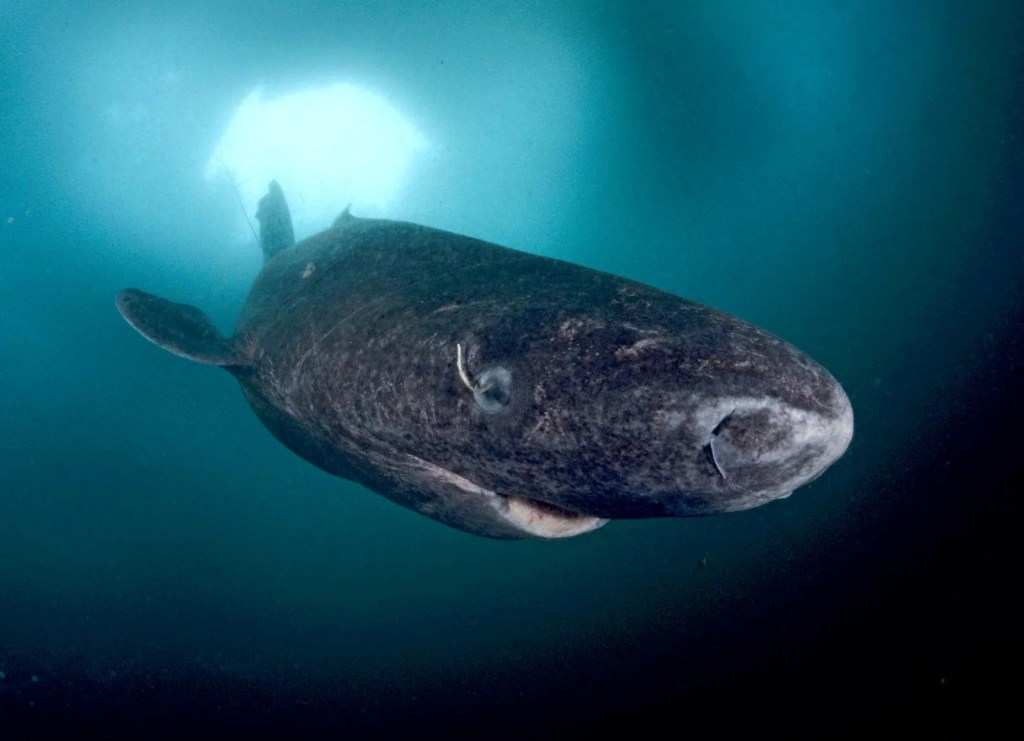
A Greenland shark has been discovered to be the oldest living vertebrate on our planet. It came into existence at the very beginning of the 16th century and is currently more than 500 years old. It is still lingering in deep, cold waters inside the arctic circle. The world has gone through wars and revolutions above and around him. Egos and pride of the human world has faded along with the carcasses of those too selfish, too ignorant and too eager to inflict horrors into a world that will eventually discard us, just like we are trying to discard everything, including ourselves. On a geological timescale we are but a dot. We might still find the wisdom to change, but if we fail, all that we will have ever left behind will be dust swallowed by the earth, surrounded by the shores, deeper and farther away towards the open ocean where the great survivor will have prevailed the 6th mass extinction.
– Roman Alexander


Leave a Reply