

Everybody, let’s jump on the abstract imagination train, ‘cause we’re all gonna need it for this one!
Many of you have heard already about how fortunate we are to have Jupiter in our solar system protecting us from asteroids rushing towards the inner rocky planets. In this scenario, you’ve also heard how many of these space objects collide with the gas giant and how some of them are slingshot right out from the solar system. What does all of this have to do with space crafts? Almost everything, as in both cases the objects abide by the laws of gravity.
Let’s say we have a spacecraft directed towards Pluto. For a spaceship travelling away from the Sun, there is a strong gravitational pull from the star, yet as our spacecraft approaches Jupiter (or another gas or ice giant), the velocity of the ship starts to increase from the gravitational pull. Mind you, all four planets beyond the asteroid belt have very strong gravitational pulls, especially Jupiter, used for both Voyager 1 and 2 to get both of them slingshot beyond the boundaries of the heliosphere.
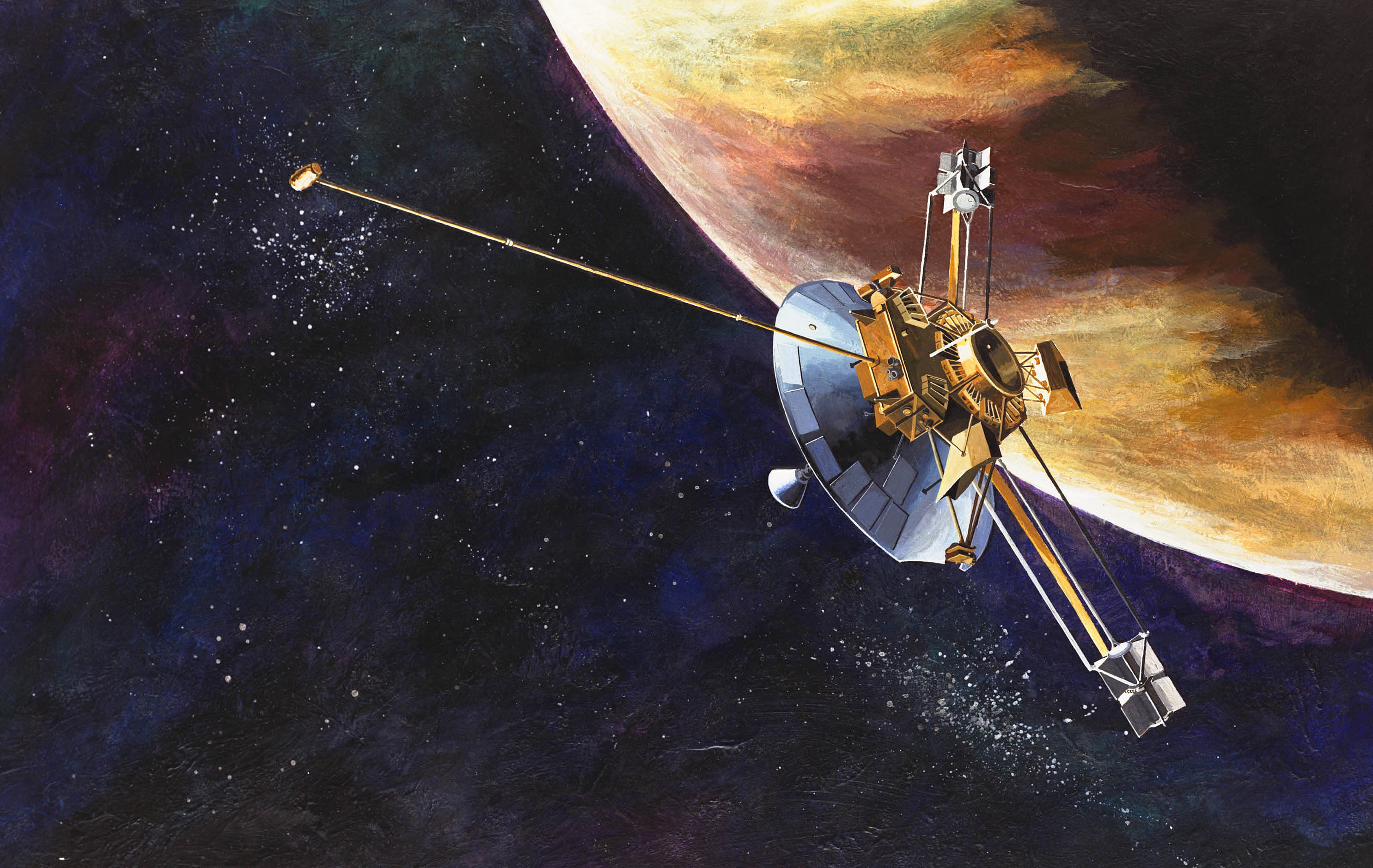
Each planet has an orbital speed around the Sun. When the spacecraft approaches the planet, the orbital momentum of the planet will give it a strong boost in speed. In order to do so, before catching up with the planet, the spacecraft will need to follow its orbital trajectory, in other words, the craft will not fly straight ahead into the planet, like we see in almost every sci-fi movie or TV show. The nearer a ship is able to close in on the planet, the higher the orbital momentum and the greater the increase in velocity. In order not to crash into the planet, the spacecraft will fire its engine to escape the pull of the planet. However, during this process the spacecraft will lose a small percent of its speed, although, the overall speed will still be far greater than before the close up with the planet.
It might be hard to believe it, but during the flyby, Jupiter will also lose an infinitesimal amount of its orbital speed because of the spacecraft. If we had billions of billions of billions of spaceships at our disposal doing these slingshots around Jupiter, the planet would eventually get slowed down at such an extent, that it would fall right into the Sun. Every speed boost from an artificial spacecraft means a transfer of momentum, slowing the planet down. Now don’t get nightmares about Jupiter’s demise as king of planets, because a scenario of bazillion spacecrafts doing gravitational slingshots around Jupiter is almost impossible!
In order to decrease the speed of a spacecraft, it needs to encounter the planet from the opposite direction of its orbital trajectory. NASA has used this approach several times for both the probes sent towards Venus and Mercury and for those directed towards the gas and ice giants and their moons.
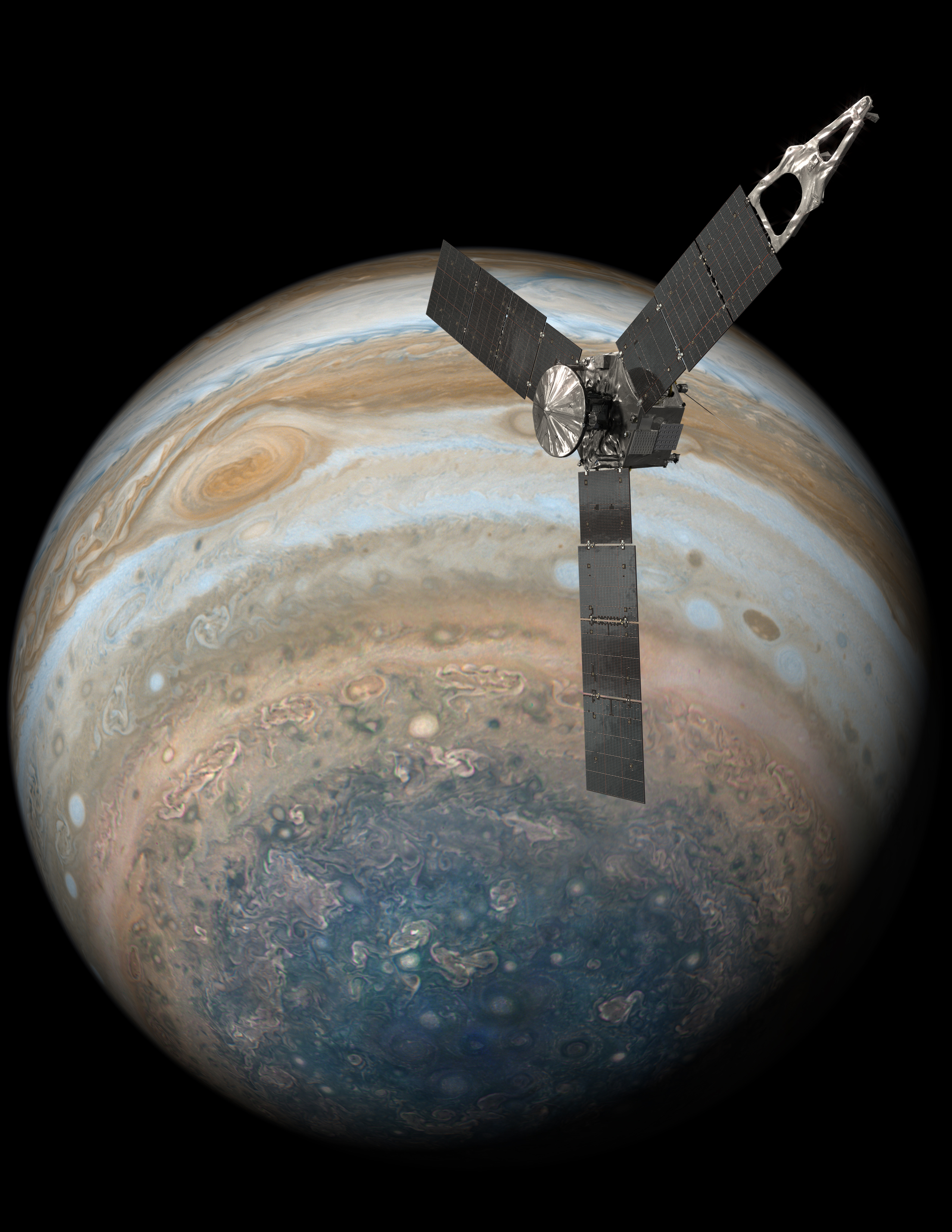
In short, until the planets decide to file an official complaint against humans for using them for selfish scientific reasons, we will probably continue using gravitational slingshots around them for many centuries to come, with no regard towards the personal feelings of the planets. – Roman Alexander
(This article was requested by Daniel Caughtry from Christchurch, New Zealand)
*If you have questions or curiosities about the Universe, submit your questions via this website and I’ll make sure to answer your requests by publishing an article that will be featured here and on my Facebook page.
 ASTROPEEPS.COM
Leave a comment