

Space travel for humans is still in its very early stages, not to mention the vast number of bozos out there who aren’t even capable in grasping Earth as a globe, let alone imagine travelling to a different planet or system. (I read the Logan Paul story today and went into rage mode while realizing how intellectually low mankind still is)
For manned missions, the farthest we’ve been so far is to the Moon, while Voyager 1 entered interstellar space on August 25, 2012 and Voyager 2 on November 5, 2018, when it passed the outer boundaries of the heliosphere. As a side note, none of the robotic probes have truly exited the solar system yet, as they are still in a region where the gravitational influence of the Sun is still present. But that’s a story for another article, where I might write about how large our solar system really is.
That being said, everything from this point on is purely theoretical, as I will probably be old and saggy, if not dead years old already, when humans will travel past the orbit of Mars.
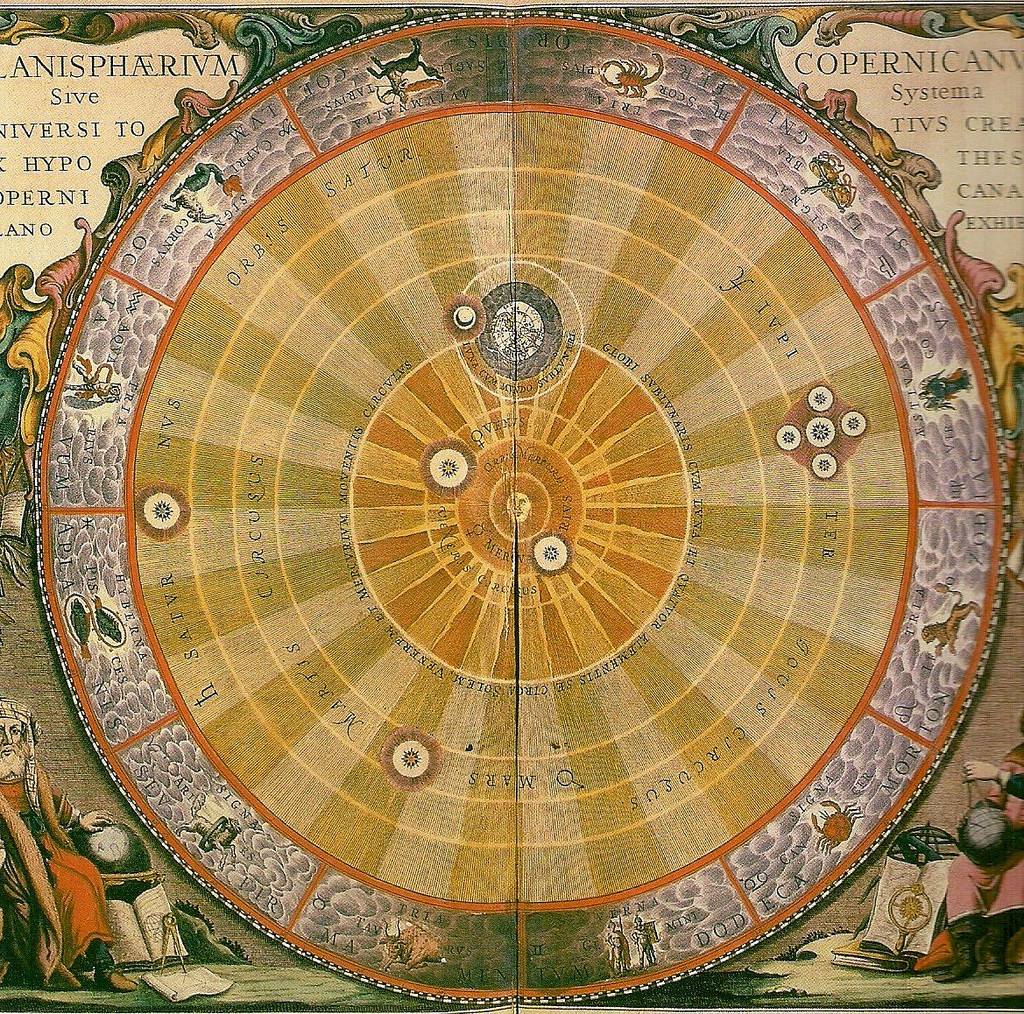
On Earth we have cardinal points determined by our planet’s magnetic field. Inside our solar system we use planets as coordinates, although, in order to do so, we need to calculate the alignments in advance of our missions according to orbital dynamics. If we send a spacecraft to Titan, we need to accurately know where Saturn will be in about 6 years from now and where Titan will be relative to Saturn. Fortunately we have gravity at our disposal, by using gravity assisted maneuvers generated by these objects (planets and moons) in order to change the speed and the trajectory of the spaceship.
If we exit the solar system, our main coordinates become the stars and their motion around Sagittarius A*. Again, we can accurately calculate the exact position of these objects well ahead and up to the point we would eventually reach our destination. Say we want to reach exoplanet Kepler-22b, 600 ly away from Earth. We need to accurately calculate the exact position of Kepler 22, a Sun-like star at the center of the system. Once we have all the info, we need to map the entire Kepler 22 system, in order to know the exact position of Kepler 22b by the time our spacecraft would reach the exoplanet.
Now that we have a general image of space travel inside our Galaxy, the question remains: what if we wanted to travel beyond the Milky Way? According to the general laws of physics… impossible! The Universe is expanding faster than the speed of light; therefore if we exited the Milky Way, we would get stuck in intergalactic space for eternity, seeing all galaxies, including the Milky Way, moving away from us. (I wrote an article on the subject last year, with a super cool reference about the horrors of listening to Justin Bieber’s music forever)
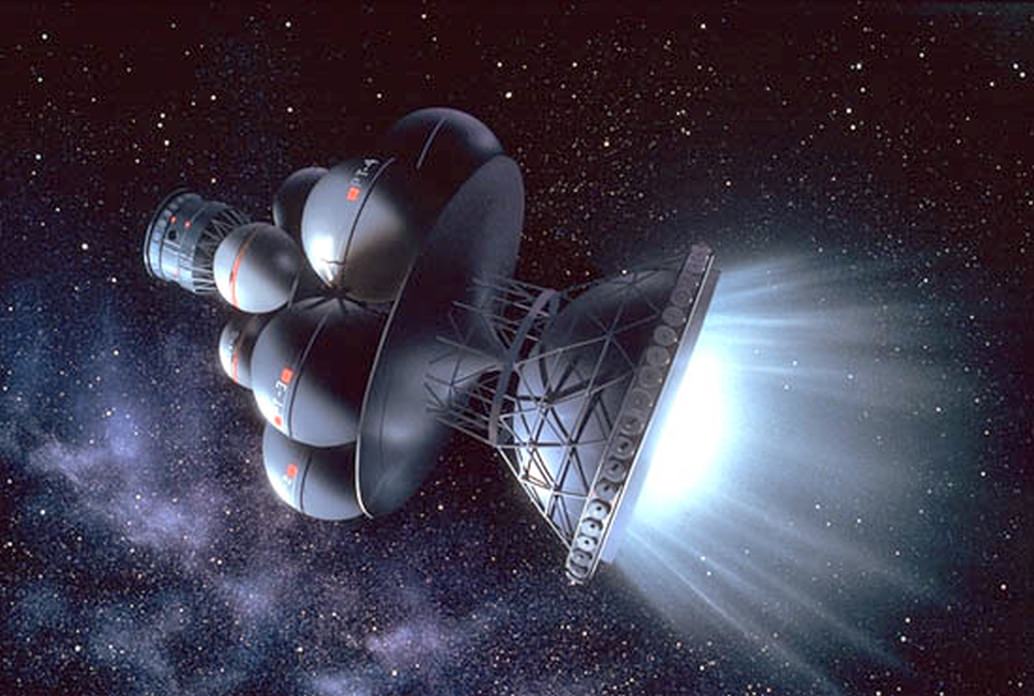
And since I’m a dream killer, there is an issue regarding the velocities we can currently reach. We know that most objects of interest will be reachable by mankind in the following decades, with technologies that will take us anywhere inside the solar system within a couple of years of travel. Yet, according to our current knowledge, even traveling to our solar system’s nearest star, Proxima Centauri would require 81.000 years at a velocity of 56.000km/h, something that’s still out of our reach, at least until we put into practice ion thrusters. – Roman Alexander
(This article was requested by
Navindra Roopnarine from Trinidad and Tobago)
*If you have questions or curiosities about the Universe, submit your questions via this website and I’ll make sure to answer your requests by publishing an article that will be featured here and on my Facebook page.
 ASTROPEEPS.COM
Leave a comment