
All of us have spent hours watching movies depicting how easy it is to destroy a planet. News flash! Not such an easy thing to do! In fact, from certain perspectives, it’s a bit easier to destroy a star than to destroy a planet. Considering this is an astronomy page, we won’t be talking about heavy breathing Darth Vaders blowing up space objects, just to compensate for their physical shortcomings… pun intended! Instead, we will discuss about the natural factors (and an artificial one) that can harm a planet towards its complete destruction.
When it comes to stars, we already know they can be consumed by black holes, other sister stars, by neutron stars, or by self-destruction during the silicon fusion into iron inside supergiants (stars of 10 solar masses and up).
With planets, thing are a bit more complicated, because it depends on many factors and situations, and since I need to keep these articles decent in size (otherwise no one’s gonna actually read them), I can only cover some of the possibilities.

In gaseous planets, such as Jupiter, the demise usually comes from their close proximity of orbit around their parent star. In most cases, gas giants appear as hot jupiters, planets orbiting closer and closer to their star. A planet the size of Jupiter would not be able to survive at a distance shorter than 0.15 AU to a Sun-like star, because its massive atmosphere would gradually and literally boil away into space, sucked by the gravity of the star. Jupiter, in its current position is one of the most stable planets in the solar system. In fact, it will last for billions of years after the Sun is gone. As a fun fact: although it’s not losing mass, Jupiter is shrinking by 2cm every year, because it radiates more energy than it receives from solar radiation.
Earth-like planets are as hard to destroy – if not harder – as gas giants. Earth, for instance, is a massive ball of iron of 5.9736 x 10^24 kg. It can withstand innumerable comet and asteroid hits, not to mention that no nuclear war invented by man could rip the planet apart. Not even close!

So what can? Besides our probable demise due to the Sun’s expansion into a red giant in about 5 billion year, when Earth will probably be swallowed by our dying star, we could destroy our planet today if we created a microscopic black hole on its surface. Such a black hole would make its way to the core of the planet, oscillating and cutting through its layers like a hot knife through butter until it reaches a stable position in the center of Earth’s core, starting to consume matter around it, until the entire planet is gone.
And if we’re on the subject, than yes: black holes do destroy everything, including stars and gas giants. It’s so very futile to even mention the amount of cosmic objects gradually sucked in by black holes all over the universe.
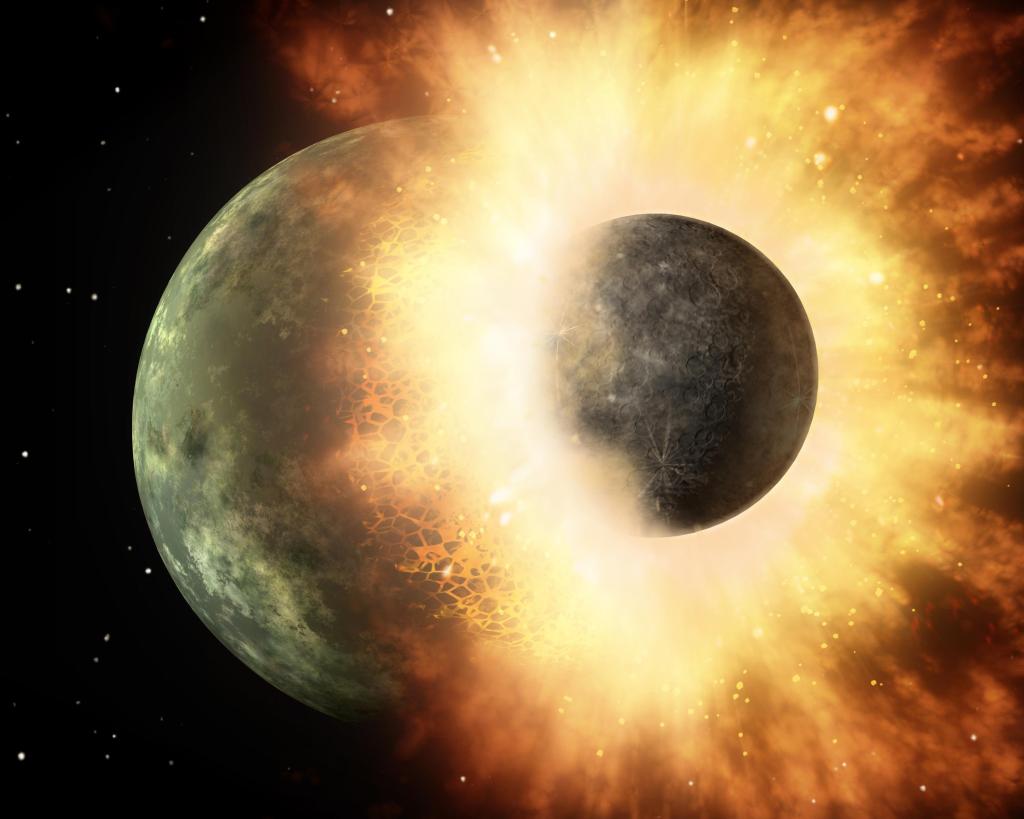
Then, we have collisions between planets, because, yes, planets collide all the time and it happened to us as well during the Hadean eon, only 100 million years (max) after the solar system was born.
During the Earth collision with the proto-planet Theia, the Moon was formed from all the debris thrown into orbit. The outcome was more than fortunate for life on Earth, thanks to the formation of our natural satellite and all the benefits it had in shielding our planet and regulating its climate, keeping Earth’s axis in a stable position and so on. But remember, the outcome was positive, because the angle of collision was proper for the fusion of the two planetary cores. A different angle of collision would have pulverized both Earth and Theia, destroying two planets at once. Such collisions do happen all over the cosmos, mainly during the first ages of newly born star systems, and are less frequent if a rogue planet is pulled by the gravity of a star inside an already formed planetary system.
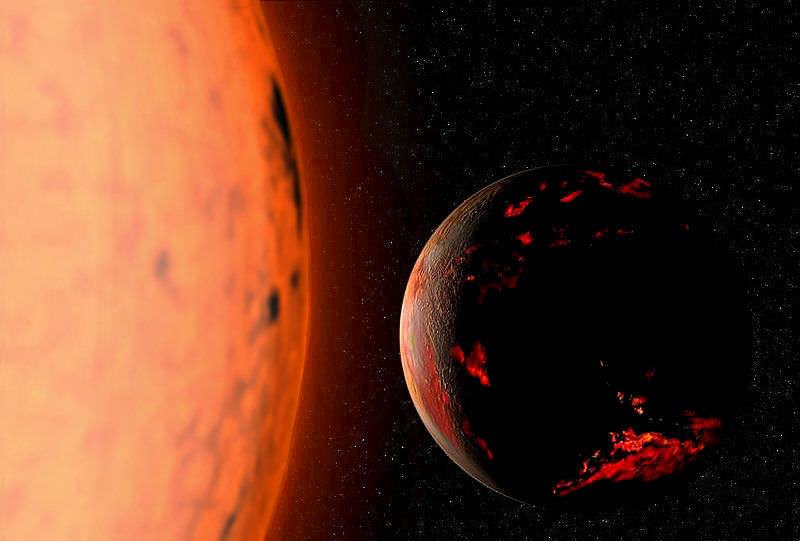
And, of course, as I’ve already mentioned: the Sun. It’s unclear if during its transition from a main sequence star into a red giant, the Sun will expand beyond Earth’s orbit or not, but it will definitely destroy two planets: Mercury and Venus. Both will be consumed by the scorching heat of the red giant leaving behind only an iron core that will be eventually sucked into the Sun.
The Universe is, as we all know, extremely violent with events and objects capable in destroying everything around them. Besides black holes, there are quasars, neutron stars and their evil sisters: magnetars and pulsars, all capable in destroying planets if placed in the right, or rather misfortunate position. As for our solar system, at least for now, there are no immediate threats so we can all relax and keep exploring our cosmic family in orbit around the Sun. – Roman Alexander
(This article was requested by
Fareez Haiqal Yahaya from Malaysia)
*If you have questions or curiosities about the Universe, submit your questions via this website and I’ll make sure to answer your requests by publishing an article that will be featured here and on my Facebook page.
 ASTROPEEPS.COM
Leave a comment