
Astronomical discoveries have shown us how violent and chaotic the Universe can be. Killer stars, black holes, quasars, to name a few, all seem to exist to destroy everything surrounding them. Yet when we look at our solar system, everything seems to be as precise as a Swiss clock, a lone main sequence star surrounded by eight pretty regular orbits and some space debris. You’ll see later in this post that even our solar system has some odd irregularities, though all in all it represents one of the best outcomes for a peaceful cosmic neighborhood.
First, let’s see where we reside inside the Milky Way. Our galaxy extends into two spiraling arms. Problem is, both these arms initiate in the radiation zone surrounding Sagittarius A* at the center of the Milky Way, so there is a high chance of radiation exposure for the celestial bodies residing in these arms. Where are we on these two arms? Nowhere! We’re between the two. There’s more! Not only are we located between the two spiraling arms, but we are also placed in the green zone of our galaxy, the Goldilocks (4-10kpc from the galactic center), not too close to the galactic center to be bombarded by radiation and not too far out.
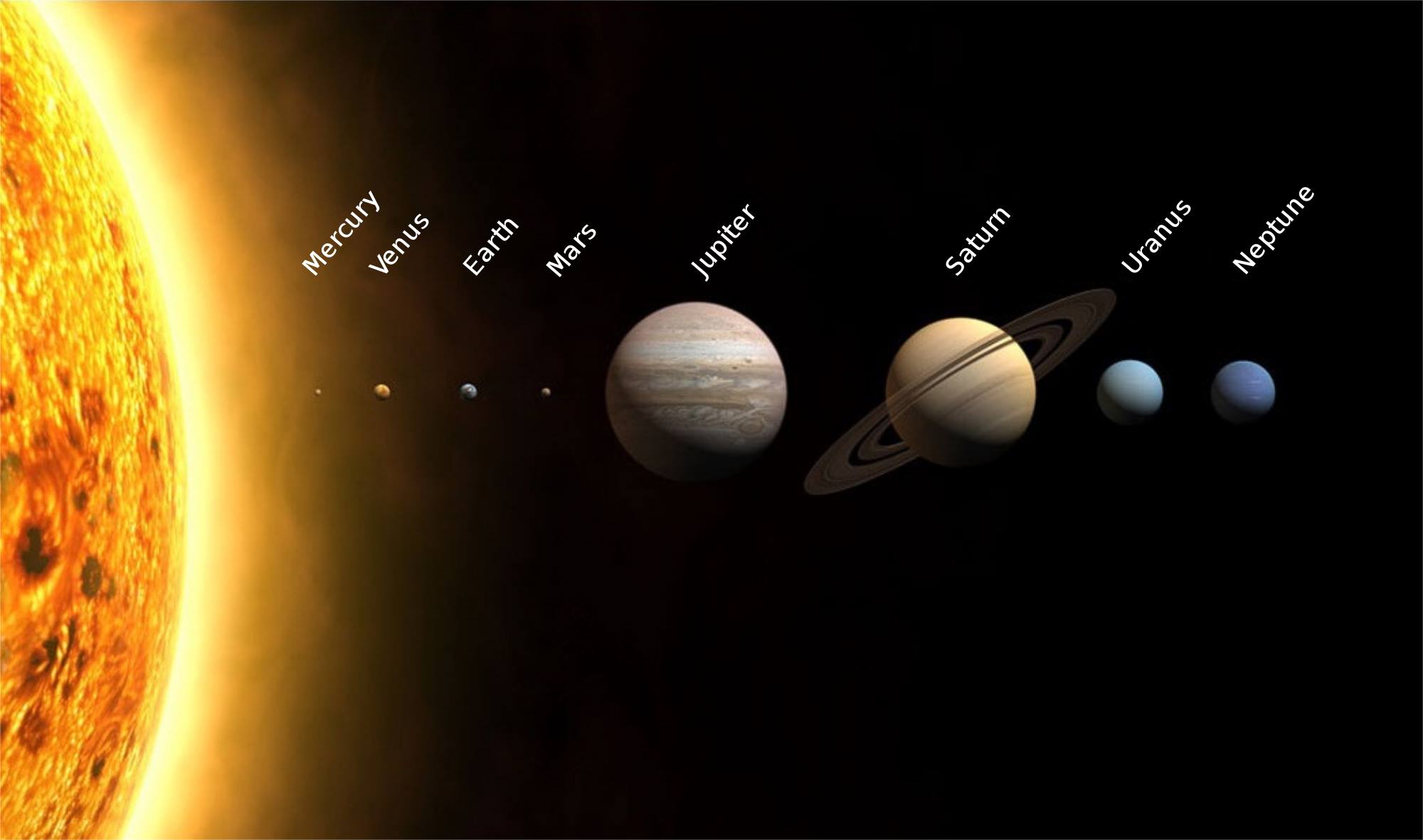
The Sun! Our star also stands out for being a single star system. In fact, most stars come in couples or in three star systems. Ours is a lone star that used 99% of the material from its original giant molecular cloud, leaving little behind for a second star to be born. The size of our sun is just right for life to evolve for a very long time, as it’s not too large to be a giant burning through its fuel in a couple of hundred million years, but a yellow dwarf taking around 10 billion years to burn through its main sequence stage. Does this make our sun to be the odd one out? Well, besides its size, the fact that it’s a single star system and it’s placed in the galactic Goldilocks; also consider that most stars (by far!) in the Milky Way are red dwarfs, small stars that take hundreds of billions of years to burn out. We cannot say our sun is unique, but it’s pretty special.
The planets! What fascinate us most in our solar system are the gas giants, mostly Jupiter and Saturn. Jupiter, the King of the Solar System, is the odd one out. When we observe exoplanets, most of those that we discover are hot jupiters, gas giants orbiting their stars so close, that they become incandescent globes doomed to be consumed by their star. Yet Jupiter is located far out from the sun, around 816 million km in aphelion. Why? Because of Saturn, keeping its larger brother stable in its orbit, preventing Jupiter from spiraling towards its star.
The Earth and the Moon! Yes! Besides being the only planet we know of capable in hosting life, Earth is more than odd because of its huge natural satellite. Nowhere else in the solar system do we see a planet with such a large moon compared to its own size. Yes, there are larger moons in our solar system, but the planets they orbit are gas giants, far larger in size. The radius of the Moon, however, is more than a quarter of Earth’s radius. Together, the Moon and Earth almost look like a small system of two planets.
So yes, our solar system is the odd one out in so many regards. But the universe is a big place, so there is a strong chance for millions of other solar systems to have most of the characteristics of our own. For now we can at least smile at the idea that we are very special in our cosmic home and in the vastness of the universe. – Roman Alexander
(The question was originally asked by Alan Hardy from The United Kingdom)
 ASTROPEEPS.COM
Leave a comment