The process in determining the atmospheric chemical composition of a planet is pretty simple and is basically the same for all planets, given that we have one fundamental element in our equation: a light source.
Now, as far as Venus goes, we were actually there, during the Venera Missions of the Soviet Union, in the ’70, not to mention Mars, now engulfed in the well-known planetary storm you read about these days.
What about the rest of the planets? How do we figure out the chemical composition of their atmospheres? Light! When we observe a planet, we can analyze the light from a star passing through its atmosphere. Different chemical elements absorb parts of the light spectrum, so, by analyzing the light filtered by the atmosphere, we get a signature, telling us exactly what the chemical composition is. Basically, astronomers analyze the light filtered by the atmosphere and spread it through a spectrum, in a resulting barcode with colored parts missing in the barcode depending on the elements present in the atmosphere, hence the signature. This process is pretty easy for the planets of our solar system, because the Sun is a perfect light source in determining the composition for each celestial body, but what about distant worlds too far away and to faint to be observed directly through a telescope?
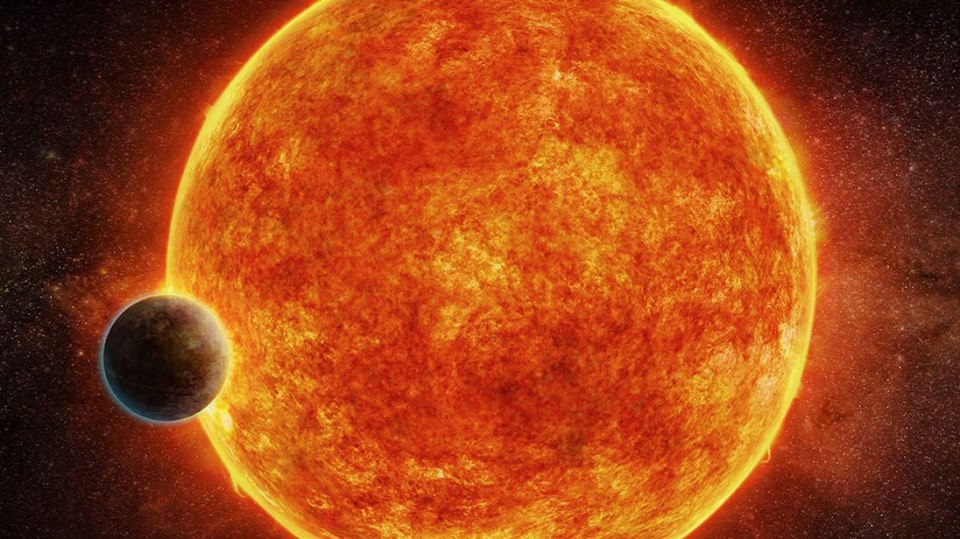
The first exoplanets we discovered were hot jupiters, huge gas giants (most of them larger than our own Jupiter) orbiting their stars in close proximity. The passing of the planet in front of its star would give us a glimpse of the light filtered by their extended atmosphere, thus revealing the photometry. The better our telescopes get, the better our chances in determining the atmospheric chemical composition of smaller alien worlds. – Roman Alexander
(The question was originally asked by Karan Pattanaik from India)
 ASTROPEEPS.COM
Leave a comment