
The power of a star can be translated into many things, such as size, mass, longevity, the harm it can unleash to other cosmic objects and so on. Check out the list I made of some of the most “powerful” stars to have ever been discovered (hope you’ll appreciate these cool star symbols I found online)
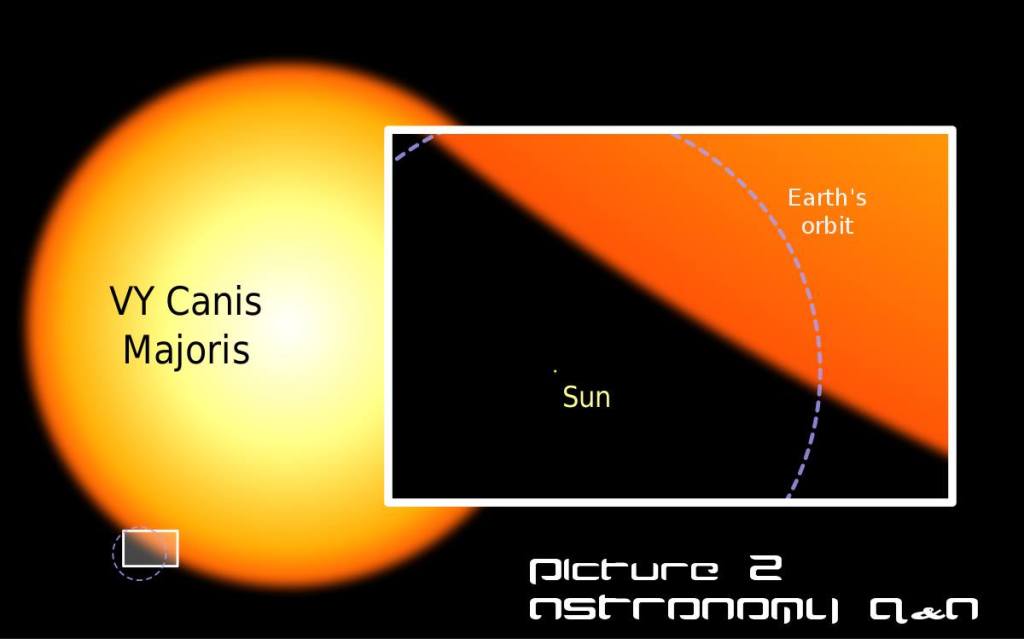
★ Largest main-sequence star is RMC 136a1 (aka R136a1). This is the largest star ever discovered that is still burning through its hydrogen core. It lies in the Tarantula Nebula, some 165.000 light years away from Earth. Its mass is 315 times that of the Sun. (picture 1)
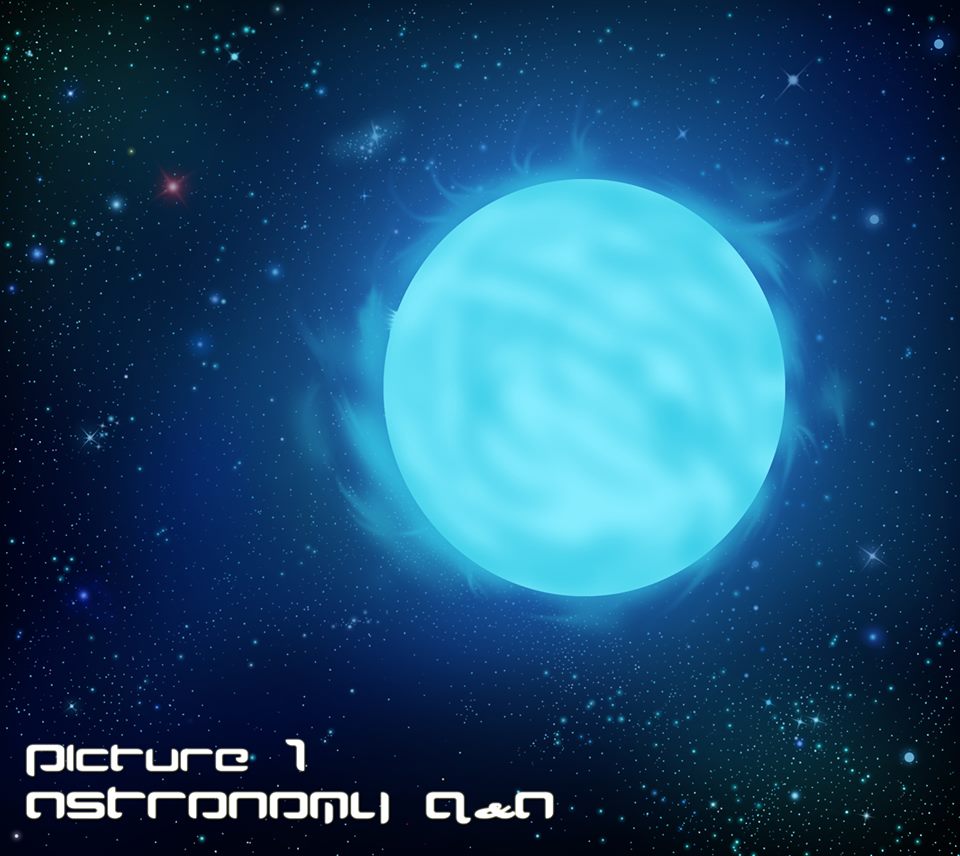
❂ Largest star in volume is UY Scuti, thought this one is highly debatable. UY Scuti lies so close to Sagittarius A*, the supermassive black hole at the center of our galaxy, that we are uncertain about its mass, size or luminosity. At this point I would say VY Canis Majoris is the largest star in volume (3900 light years away from Earth). VY Canis Majoris is a Red Hypergiant so large that, placed inside our Solar System, it would engulf both Jupiter and Saturn. What you need to know about stars this size is that they are dying stars, about to explode into supernovae. Canis Majoris is supermassive but low in density, only 17 ± 8 times the mass of the Sun. (picture 2)

❇ Most dangerous star for Earth is Eta Carinae (7500 light years away from Earth) in the Carina Constellation. This one is tricky, because it’s not actually a star, but a star system made of at least two massive stars with at least 250-300 solar masses combined. Though none of them is as large in volume as VY Canis Majoris, their mass and density is a potential problem for us. The Eta Carinae A and B are joined in a cosmic dance around each other. The supernova explosion of one of these stars will affect our atmosphere, satellites, ozone layer and spacecrafts. Life on our planet won’t be affected thanks to our atmosphere. (picture 3 showing Eta Carinae collapsing into a black hole after its supernova explosion)

✷ Most dangerous stars in the universe are magnetars. All of them! They are neutron stars (only 20km across), corpses of dead stars, but unlike neutron stars, magnetars have a magnetic field 1.000 trillion times the magnetic field of our planet. The starquacke of magnetar SGR 1806-20 affected our planet on the 27th of December 2004. It was so strong, that its gamma rays stripped an entire layer of Earth’s atmosphere! Still not impressed? Magnetar SGR 1806-20 is 50.000 light years away from Earth. (picture 4 showing an image in infrared light of magnetar SGR 1900+14. The image was taken by the Spitzer Space Telescope)

Hope you enjoyed my list. If you have any suggestions or curiosities about these objects, let me know in the comment section or in a message. – Roman Alexander
(The question was originally asked by Ashish Patil from India)
 ASTROPEEPS.COM
Leave a comment